

Currently Empty: ₹0.00
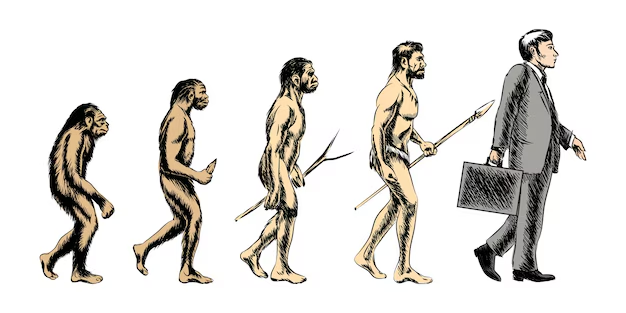
Next in the timeline are the Australopithecines, a group of hominins that lived from about 4 to 2 million years ago. These species are better understood thanks to numerous fossil finds.
The most famous Australopithecine is “Lucy”, a 3.2-million-year-old specimen of Australopithecus afarensis discovered in Ethiopia. Lucy had a small brain, long arms, and curved fingers, suggesting she still climbed trees, but her pelvis and leg bones clearly show she walked upright.
Australopithecines were diverse, and different species adapted to various environments. Some had larger jaws and teeth, such as Australopithecus boisei, indicating a diet of tough, fibrous plant material.