

Currently Empty: ₹0.00
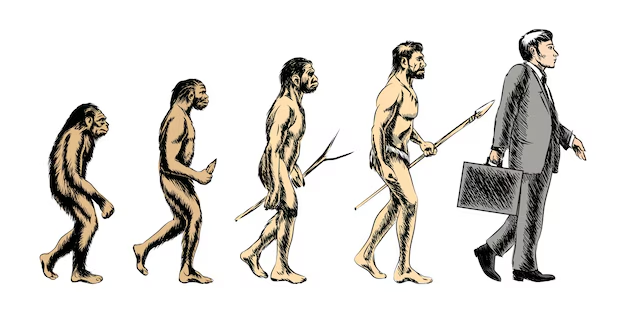
The journey begins in Africa, where the earliest known human ancestors lived. These ancestors were not yet human but belonged to the group hominins, which includes all species more closely related to humans than to chimpanzees.
One of the earliest known hominins is Sahelanthropus tchadensis, who lived around 6 to 7 million years ago in what is now Chad. This species had a small brain but showed signs of bipedalism—the ability to walk on two legs, a key step in human evolution.
Following this came species like Orrorin tugenensis and Ardipithecus ramidus, the latter dating back around 4.4 million years. Ardipithecus had a mixture of ape-like and human-like traits, including a grasping big toe (good for climbing) and a pelvis that suggested it also walked upright.