

Currently Empty: ₹0.00
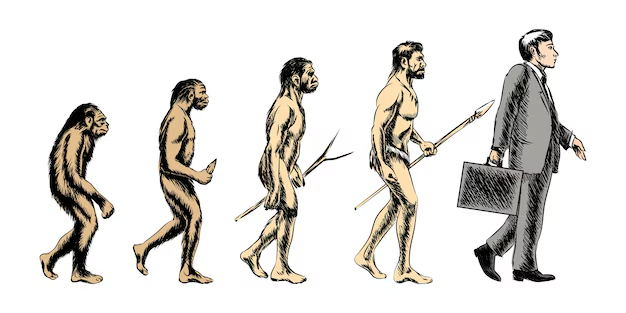
Tool use has been a hallmark of human evolution. The earliest tools—sharp flakes made from stone—date back 2.6 million years. Over time, humans developed more sophisticated technologies, including spears, bows, and fishing gear.
Language likely evolved gradually, allowing early humans to share knowledge, coordinate hunting, and pass down traditions. While the exact origins of language are unknown, the development of complex communication gave Homo sapiens a key advantage over other species.
Culture—including art, religion, and social structures—grew increasingly complex. Humans began to form communities, farm the land, domesticate animals, and build civilizations. This rapid development is often referred to as the Cognitive Revolution.