

Currently Empty: ₹0.00
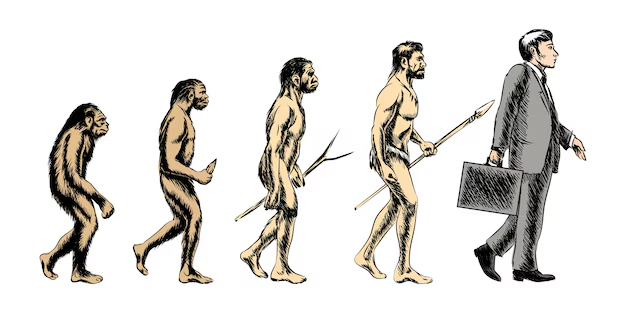
Homo sapiens, our own species, emerged in Africa around 300,000 years ago. The earliest fossils, found in Morocco, show a mix of modern and archaic features.
What makes Homo sapiens unique is not just our anatomy, but our behavioral complexity. Around 100,000 years ago, humans began creating symbolic art, using complex language, and developing diverse cultures. Cave paintings, carved figurines, and musical instruments from this time provide evidence of abstract thinking and creativity.
From Africa, Homo sapiens spread across the globe. This migration began around 60,000 to 70,000 years ago, reaching Australia by 50,000 years ago, Europe by 40,000 years ago, and the Americas by at least 15,000 years ago.