

Currently Empty: ₹0.00
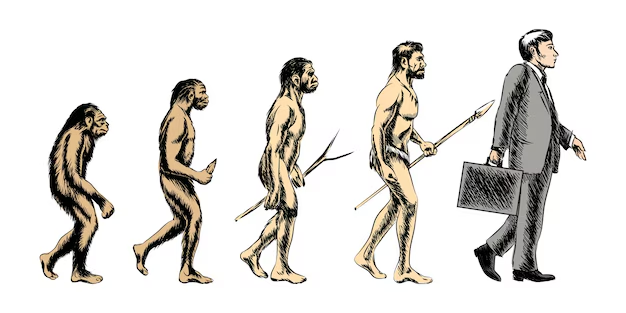
Around 2.5 million years ago, a major evolutionary shift occurred with the emergence of the genus Homo, marking the appearance of early humans.
Homo habilis (“handy man”) is one of the earliest members of our genus, known for using simple stone tools. This species had a larger brain than Australopithecus and is believed to have been more intelligent and social.
Then came Homo erectus, appearing around 1.9 million years ago and surviving for over a million years. Homo erectus was a successful and adaptable species, spreading out of Africa into Asia and Europe. They had a more modern body structure, used fire, created more complex tools, and likely lived in small social groups.